
How to choose sunglasses for your face shape
Some glasses look perfect on the display, but for some reason, they don't "fit" well after trying them on. It's not about the model or the brand — it's about the face shape. What looks flawless on an oval face might seem heavy or inappropriate on a round one, and vice versa.
Figuring this out is easier than it seems. It is enough to determine your face type and know a few basic selection principles — and trying on glasses will stop being a guessing game.
How to determine your face shape
The easiest way is to stand in front of a mirror, pull your hair back, and trace the outline of your face with a marker on the mirror, or take a front-facing photo with even lighting.
After that, pay attention to three things:
- the width of the forehead, cheekbones, and jaw — where the face is widest
- the ratio of the face length to width
- the jawline — is it sharp or rounded
These three parameters determine which basic type your face is closest to.
Oval face
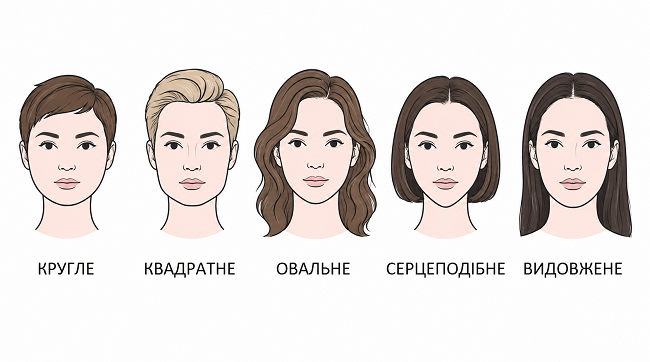
This is the most balanced shape: the length is approximately one and a half times the width, the lines are smooth, with no sharp angles, and the cheekbones are the widest point of the face.
Oval face owners are the luckiest — almost any frame shape suits them: Aviator, Wayfarer, round, square. The only rule is not to choose a frame wider than the widest point of the face.
Round face
The cheeks and jawline are rounded, the face width and length are approximately equal, and there are no sharp angles.
The principle of contrast works here: frames with clear straight lines — square, rectangular, classic Wayfarer — add structure to the face and visually lengthen it.
It is worth avoiding round and overly small frames — they only emphasize the roundness instead of balancing it.
Square face
A wide forehead and a distinct angular jawline, approximately the same width as the forehead — the features are quite clear and "graphic."
The same principle of contrast works here, but in the opposite direction: round and oval frames soften the jaw's angularity.
However, it is better to avoid square and rectangular shapes — they only emphasize the face's already pronounced angles.
Heart-shaped face
A wide forehead and cheekbones narrowing down to a narrow pointed chin — a shape resembling an inverted triangle.
Frames that slightly expand downward, or models with a thin, non-bulky upper part — aviators or round glasses without massive upper lines — work best here. They balance the width of the forehead.
However, massive "cat-eye" frames with a wide top are better left on the display — they add weight to an already wide upper part of the face.
Elongated (rectangular) face
The face length is noticeably greater than the width, the features are elongated, and the jawline is almost straight.
Large, round, or square frames with decorative details on the temples are needed here — they visually "shorten" the face and add width. Classic Wayfarers also cope well with this task.
Narrow and small glasses are better avoided — they make the face even longer.
Face shape and frame shape: summary table
| Face shape | Suitable | Better to avoid |
|---|---|---|
| Oval | Almost any shape | Too wide frames |
| Round | Square, rectangular, Wayfarer | Round, small frames |
| Square | Round, oval, Aviator | Square, rectangular |
| Heart-shaped | Aviator, thin top frame | Massive "cat-eye" |
| Elongated | Large round and square | Narrow small frames |
Three practical fitting rules
Face shape is just a starting point. During the fitting itself, pay attention to a few more details:
- Eyebrows should be visible or only slightly covered by the upper line of the frame — not completely hidden.
- Frame width should match the face width at its widest point — glasses should not extend beyond the contour of the cheeks or temples.
- Contrast principle: rounded lenses suit an angular face, angular ones suit a round face. This is a basic rule that rarely fails.
The frame color also matters: light skin and hair suit transparent, light, and pastel shades, while contrasting appearances suit saturated dark colors that maintain the balance of the look.
Frequently asked questions about choosing glasses by face shape
Can I determine my face shape without a specialist?
Yes, it is enough to trace the contour of your face in a front-facing photo or in front of a mirror and compare the proportions of width and length — this can be done independently in a few minutes.
Which glasses shape suits almost everyone?
Models with a soft transition of shapes, such as Ray-Ban Aviator, are considered universal — they work well on most face types due to their thin frame.
What to do if the face combines several shapes at once?
This is a normal situation — focus on the most pronounced feature (for example, the width of the jaw or cheekbones) and pick a frame accordingly.
Conclusion
Choosing sunglasses by face shape is not about strict rules, but about the principle of balance: an angular face is balanced by rounded lenses, and a round one by clear frame lines. Knowing your face type, you will find a model that sits naturally from the first fitting much faster.
You can view models of various shapes — from classic Aviators to iconic Wayfarers — in the catalog of sunglasses of the Zirochky store.
There are no comments for this post.